
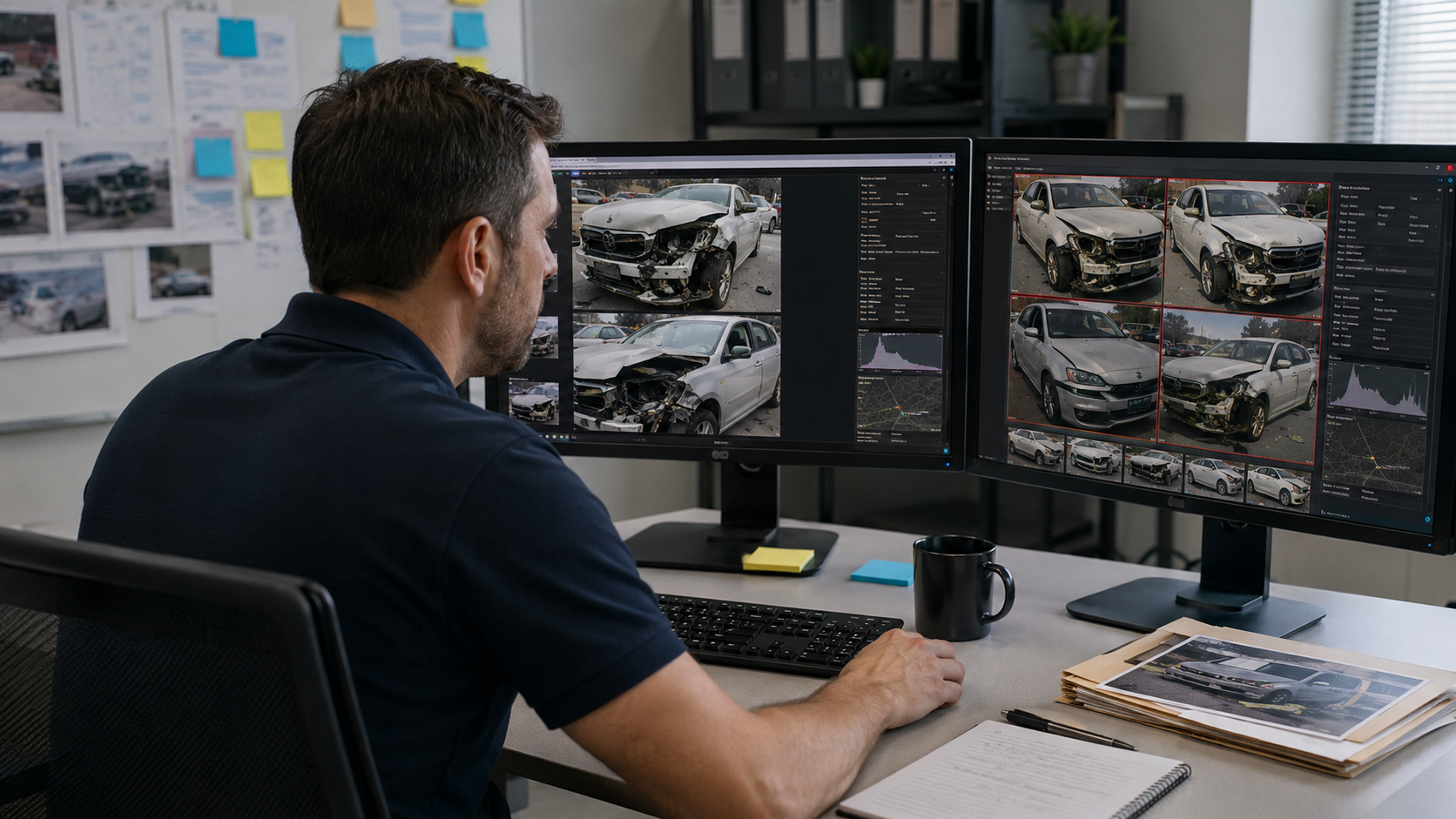
AI generated accident evidence can create serious problems in an insurance claim or lawsuit. Insurers and opposing parties may question whether an image accurately shows the scene, damage, roadway, or injuries. Preserve original files, metadata, dashcam footage, and unedited backups. Never create or submit fabricated evidence, even when an edit appears minor or intended only to improve clarity.
Generative artificial intelligence can create realistic photographs in seconds. Ordinary editing tools can also remove objects, replace backgrounds, sharpen details, or add content without obvious signs.
The National Institute of Standards and Technology’s GenAI Deepfakes program reflects the growing need to evaluate synthetic media and forensic detection systems.
Why Image Authenticity Matters in an Accident Claim
Photographs and videos may help document vehicle positions, impact damage, skid marks, traffic signals, weather, roadway hazards, visible injuries, and unsafe property conditions. Their value depends on whether they accurately represent what they claim to show.
An insurer may examine when a file was created, which device captured it, whether it was edited, and whether it matches other evidence. If one image appears inconsistent, the insurer may question both the file and the credibility of the person who submitted it.
In a lawsuit, a party generally needs a basis for authenticating evidence. Federal Rule of Evidence 901 states that a person offering evidence must provide enough support for a finding that the item is what the person claims.
State evidence rules may differ, but authenticity remains a central issue in accident cases.
What Counts as AI Generated or Altered Evidence?
Fully synthetic media is only one category. Digital evidence can also be changed through generative fill, object removal, background replacement, filters, compositing, retouching, cropping, enhancement, compression, screenshots, and social media processing.
Not every adjustment makes an image deceptive. Cropping empty space or increasing brightness may have an innocent purpose. Problems arise when a change hides relevant information, creates a misleading impression, or makes it difficult to distinguish the original from the edited version.
AI tools may be especially problematic because they can invent details that were never present. An enhancement feature might create a sharper license plate, reconstruct damaged vehicle parts, add roadway markings, or alter a person’s appearance.
The result may look persuasive while lacking a reliable factual basis.
Keep the Original File
The original file may contain metadata about the device, date, time, dimensions, location settings, and software history. Metadata is not infallible, but it may help investigators evaluate where a file came from and whether later processing occurred.
Do not rely only on a screenshot, text message copy, social media upload, or compressed email attachment. Those versions may remove metadata and reduce image quality.
Keep the native file from the phone, camera, dashcam, doorbell camera, surveillance system, or connected vehicle application.
The federal evidence rules define photographs, recordings, originals, and duplicates in Rule 1001. Rule 1002 addresses the use of an original when proving content, subject to other rules and exceptions.
These federal rules do not control every insurance investigation, but they demonstrate why original evidence may become important when a dispute reaches court.
How to Preserve Accident Photos and Videos
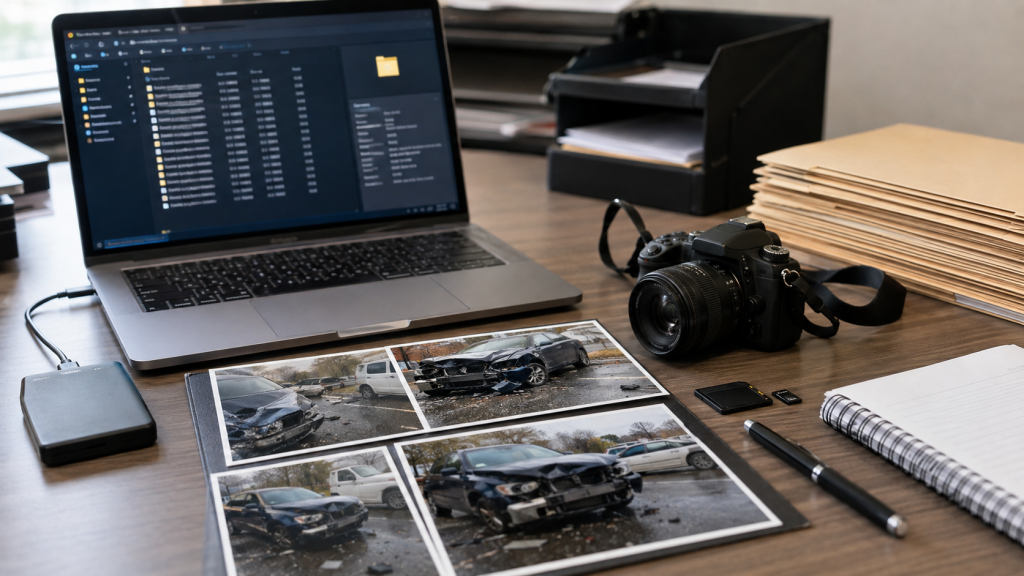
Create at least one backup without altering the source file. Copy the material to secure storage while keeping the original on the device or memory card when practical.
Use clearly named folders and retain the original file names. Record who captured each photograph or video and the approximate location.
When sharing evidence, send a copy rather than editing the original. If you create an adjusted version to make a dark scene easier to view, label it as adjusted and keep the original beside it. Document the software and changes used.
Dashcams may overwrite older footage when storage becomes full. Export the relevant clip promptly and save a longer period before and after the impact.
Vehicle applications, cloud accounts, and connected cameras may also have retention limits. Our article on smart car data after a crash explains additional sources of digital vehicle evidence.
Can an Insurer Use AI to Review a Claim?
Insurers may use automated tools to organize claims, identify patterns, estimate vehicle damage, detect inconsistencies, or flag files for human review. A software flag does not necessarily prove fraud.
Detection systems may produce mistakes, especially after images have been compressed, resized, filtered, or processed through several applications.
A claimant may ask what information is being questioned and provide original files, additional angles, repair records, witness statements, police reports, or other independent evidence.
A digital forensics professional may examine file structure, metadata, compression patterns, editing traces, time stamps, and device information when authenticity becomes disputed.
Content Credentials and Digital Provenance
The Coalition for Content Provenance and Authenticity has developed Content Credentials, a technical standard designed to provide information about the source and editing history of a digital asset.
Provenance records may provide useful trust signals about how content was created or modified. However, the absence of Content Credentials does not mean an image is fake. Many phones, cameras, applications, and older files do not use them.
The presence of provenance information should also be considered with the surrounding evidence rather than treated as conclusive proof.
NIST’s report on reducing risks posed by synthetic content discusses approaches involving transparency, authentication, provenance, labeling, detection, and prevention.
What If Another Party Submits a Suspicious Image?
Do not alter the disputed image or respond by creating competing synthetic material. Preserve the exact file or copy received, including the message, email, download source, and date.
Compare it with police photographs, surveillance footage, vehicle records, witness accounts, repair estimates, and physical damage. A request for the native file may reveal whether only a screenshot or exported copy was supplied.
Investigators may compare shadows, reflections, repeated patterns, image boundaries, compression levels, time stamps, and metadata. No single visual clue proves manipulation in every case.
If fabricated evidence appears connected to fraudulent conduct, possible reporting options may include the insurer, law enforcement, or the Federal Trade Commission fraud reporting portal, depending on the circumstances.
A person should avoid making public accusations without a reliable factual basis.
Common Mistakes That May Weaken Digital Evidence
- Using an AI enhancement tool on the only copy of a photograph.
- Deleting the original after posting an edited version.
- Submitting screenshots when native files remain available.
- Renaming files without recording what changed.
- Allowing dashcam footage to be overwritten.
- Adding labels or circles without keeping a clean copy.
- Sharing sensitive evidence publicly before the claim is reviewed.
- Assuming an AI detection tool is always accurate.

A Practical Digital Evidence Checklist
- Save Original Files. Keep native photographs, videos, audio, and downloads.
- Create Backups. Store copies in more than one secure location.
- Preserve Context. Keep surrounding footage, messages, receipts, and app records.
- Record the Source. Note who captured or provided each item.
- Separate Edited Copies. Label any cropped, brightened, or annotated version.
- Avoid Generative Tools. Do not permit software to invent or replace factual details.
- Act Before Data Expires. Export dashcam, surveillance, and cloud records promptly.
Frequently Asked Questions
Can I Brighten a Dark Crash Photo?
You may preserve the original and create a clearly labeled adjusted copy. Do not overwrite the native file or imply that an enhanced detail appeared in the original.
Does Missing Metadata Mean a Photo Is Fake?
No. Messaging platforms, social networks, screenshots, and editing applications may remove metadata. Authenticity should be evaluated through several sources.
Can AI Detection Software Prove an Image Was Generated?
A detection result may support further review, but it may not be conclusive. False positive and false negative results remain possible.
Should I Post Accident Photos Online?
Public posts may lose context, reveal private information, and create additional copies. Preserve evidence privately and consider the potential effect on an insurance or legal dispute.
Final Thoughts
Digital photographs remain valuable accident evidence, but generative AI makes careful preservation more important. Keep original files, avoid deceptive edits, save relevant context, and document how files move between devices and people.
When authenticity becomes disputed, independent records and qualified technical analysis may provide a clearer understanding of what happened.
Read more about evidence, insurance, and accident claims through the John Scott Law legal blog and the John Scott Law homepage.